
What are the most common roof types in the UK?
28 February, 2026
Walk through any street or town in the UK, and you’ll immediately see our rich history of architectural styles.
Across the decades and centuries, endless types and styles of roofs have been borne. This represents changing trends in time periods, popularities of different materials and designs, and ever-evolving construction techniques.
In this article, the Stapleford Roofing team have shed a spotlight on the most common roof types that can be found across the UK.
Pitched (gable) roof

A pitched or gable roof features two sloping sides, meeting at the top at a central ridge. This achieves a classic triangular shape.
It is a classic roofing style, which can be seen throughout the UK, including both new and traditional housing developments.
It is particularly common in detached and semi-detached homes, as well as bungalows.
Benefits:
- Easy to build and maintain
- Excellent water runoff (a great choice for the UK’s climate!)
- Good loft space (ideal for storage or loft conversions)
Drawbacks:
- Can be more exposed to strong winds (if not correctly braced)
- Can have a slightly higher upfront cost (due to more expensive material costs, compared to simpler roof designs)
Hip roof

Hip roofs have slopes on all four sides. These meet to form a ridge or a point at the top of the roof.
With no vertical gable ends, they achieve a sleek, even design. They are widely used in suburban properties (including bungalows), especially for properties located in exposed areas.
Benefits:
- Great stability and wind-resistance
- Good drainage performance
- Neat and even aesthetic
Drawbacks:
- More complicated to construct
- Slightly less loft space (compared to gable roofs)
Flat roof

Flat roofs are designed to appear almost perfectly flat. However, they do feature a slight pitch, in order to ensure sufficient drainage.
Most modern felt roofs are constructed using felt, GRP fibreglass or rubber membranes, to maximise performance.
They are commonly seen on extensions and garages, and commercial properties. They are also used in some modern residential properties.
Benefits:
- Cost-effective to install
- A great space-saving option for projects where height is limited
- Ensure easy access for maintenance or repairs
Drawbacks:
- Without the right maintenance, can have a shorter lifespan
- Risk of pooling water
- Not well suited to span large areas
Lean-to (mono-pitch) roof

Lean-to roofs consist of a single sloping surface. These are usually attached to a taller wall.
They achieve a striking modern, minimalist design, making them a great match for contemporary properties. They are also commonly chosen for additional sections of a property, such as porches and extensions.
Benefits:
- Simple to build
- Great affordability
- Dependable drainage
- A sleek, modern aesthetic
Drawbacks:
- Have limited loft space
- Can restrict ceiling space
- Not always a great match for period properties
Mansard roof
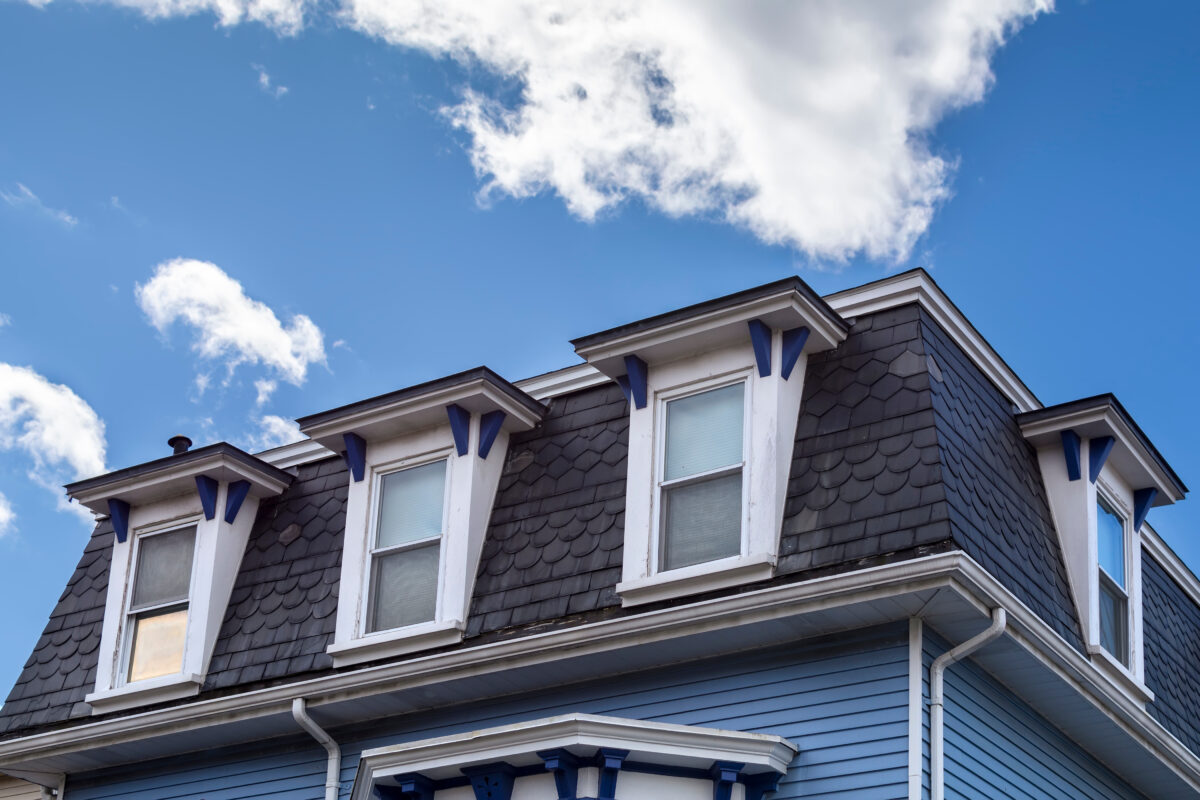
Mansard roofs are designed with two slopes on each side. Then, the lower slope is set to be significantly steeper than the other.
These roofs are widely seen in townhouses and period properties. They are also often used in loft conversions and urban extensions.
Benefits:
- A great way to maximise the available space
- Classic traditional aesthetic
Drawbacks:
- Represent a higher upfront construction cost
- More complex to maintain
- Requires extra care when waterproofing
Choosing the right roof for your property
When choosing a roof type to suit your property, there are various factors to be considered and carefully weighed up.
This includes:
- The style of your property
- The time period of your property
- Your budget
- Any planning constraints
- Your preferred maintenance requirements
- The location of your property (e.g. degree of exposure)
- Whether it’s for the main part of the property, or an extension
- How much loft / ceiling space you require
By speaking to a roofing specialist, you can effectively assess your options, and find the best roofing type to tick all your boxes.
At Stapleford Roofing, our talented roofing installers are trusted by property owners across the UK. So, to explore the options available to you, get in touch with our team.